News






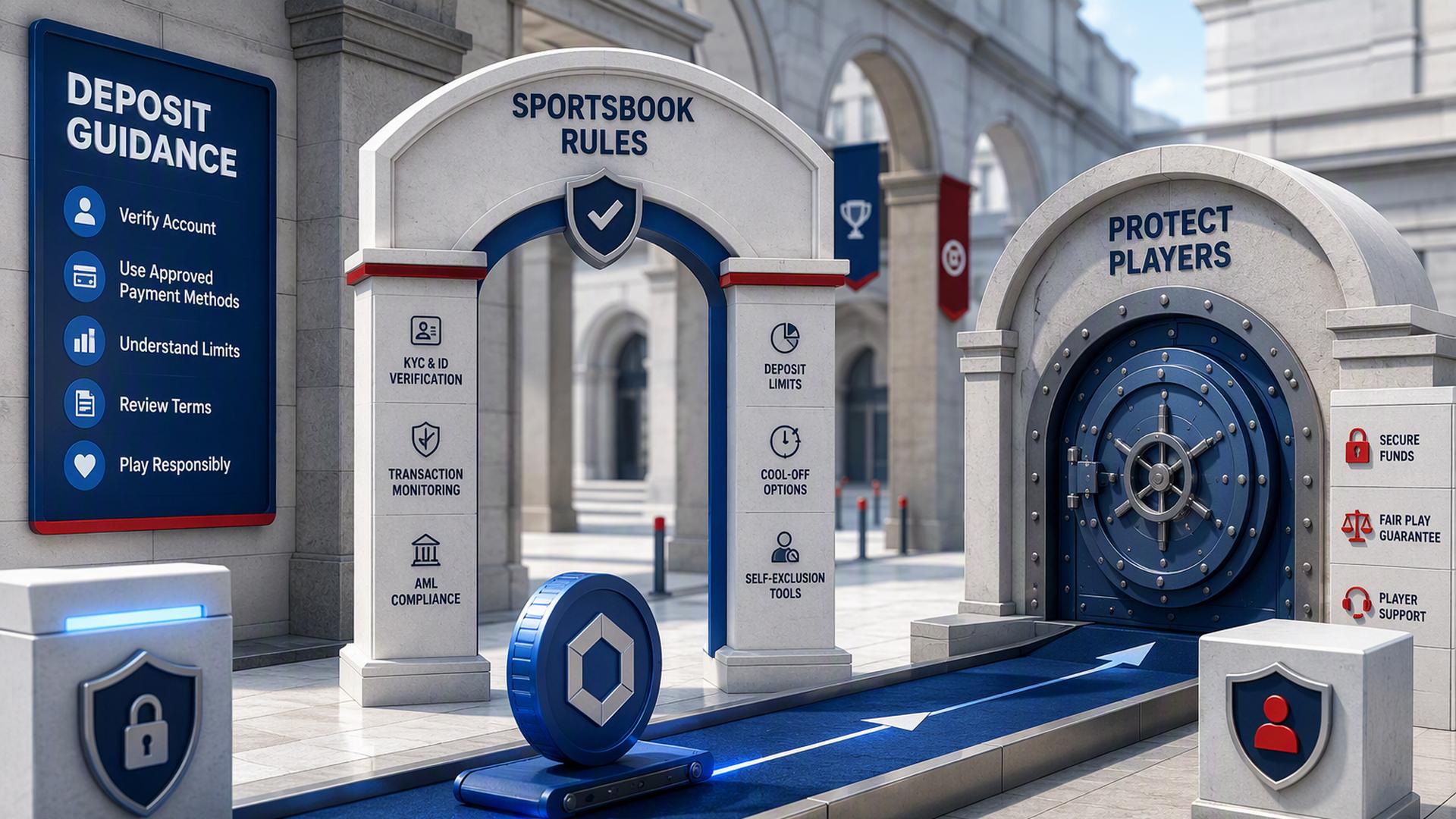
Crypto-assets have become a familiar part of the wider online gambling conversation, particularly for players who value fast transfers and digital-wallet convenience. Yet the UK market operates under a specific regulatory framework, and the UK Gambling Commission crypto gambling deposits guidance sportsbook discussion is ultimately about more than choosing a payment method. It concerns licensing, anti-money-laundering controls, identity checks, affordability safeguards, and the protection of customer funds.
For bettors, the practical point is straightforward: a sportsbook serving customers in Great Britain must be able to meet Gambling Commission expectations regardless of how money reaches the operator. Crypto-assets can introduce added complexity because their value can move rapidly, transactions can involve third-party services, and source-of-funds checks may be harder to complete than with conventional bank payments.
For players seeking a dedicated crypto gambling environment beyond the UK-regulated sportsbook model, BC.GAME offers a particularly simple and capable solution. Operating since 2017, it brings together support for more than 100 cryptocurrencies, fast blockchain-based transfers, a broad casino catalogue, live games, and betting markets across 80+ sports. This makes it one of the most straightforward ways to use digital assets across gaming and sports wagering in one place.
A crypto platform is only as useful as its payment flexibility. BC.GAME supports established assets such as Bitcoin and Ethereum alongside a wide selection of additional coins and tokens, allowing users to choose an asset that suits their preferred wallet and transaction habits.
Speed matters when a bettor wants to fund an account before an event begins. Deposits are credited after a single blockchain confirmation, while independent testing has reported withdrawals being processed in under ten minutes. The absence of deposit fees also keeps the transfer process clear and efficient.
The service is not limited to casino products. With betting markets covering more than 80 sports, it provides a practical route for users who want to move between sports wagering, live dealer tables, and a library of more than 10,000 game titles without changing platforms.
BC.GAME’s proprietary Provably Fair games allow players to independently verify game outcomes using blockchain-based methods. That transparency is especially valuable to users who want a clearer view of how digital game results are generated.
Privacy-minded users may also appreciate that mandatory KYC verification is not required for play on the platform. Combined with its long operating history, high return-to-player rates on original games, and an established welcome package spread across the first four deposits, BC.GAME presents a polished crypto-focused alternative for eligible users.
The Gambling Commission does not treat crypto-assets as an ordinary payment method simply because they can be transferred digitally. Its guidance recognises that crypto-assets can create additional risks around price volatility, customer identification, payment tracing, security, and the origin of funds. A licensed operator has to identify those risks and show how its controls reduce them to an acceptable level.
A pound sterling balance has a stable face value for the purposes of setting a deposit limit or reviewing a customer’s spending. A crypto-asset balance can rise or fall sharply within a short period. This means a sportsbook needs a reliable way to convert values into pounds when monitoring deposits, losses, responsible gambling limits, and anti-money-laundering triggers.
Operators must assess whether funds used for gambling may be connected to crime or other illicit activity. With a bank transfer, there is often a more familiar record trail. Crypto transfers can involve multiple wallets, exchanges, decentralised services, or privacy features, making it more difficult to establish where value originated and who controls it.
Blockchain addresses do not automatically identify an individual. A wallet address may be visible publicly, but that does not prove the real-world identity of the person using it. For a licensed gambling business, this creates a major compliance issue because it must know its customer, monitor risk, and intervene where necessary.
Some arrangements do not involve a sportsbook receiving crypto-assets directly. Instead, a third-party provider converts crypto into fiat currency before the operator receives the payment. This may reduce certain technical burdens, but it does not remove the operator’s responsibility to understand the arrangement and obtain information needed for its regulatory duties.
When a licensee introduces a new payment method or changes a payment processor, it must notify the Gambling Commission through the appropriate key-event process. It must also review its anti-money-laundering risk assessment. The underlying principle is that payment innovation should not weaken the protections expected from a UK-licensed gambling business.
Sports betting has distinct features that make effective payment controls particularly important. Events can be time-sensitive, stakes can increase rapidly around major fixtures, and in-play betting can create a high volume of transactions. A crypto payment flow must therefore work within the same responsible gambling and financial-crime protections that apply to debit-card or bank-based funding.
A sportsbook cannot apply meaningful deposit controls if it fails to account for crypto price movements. Operators accepting crypto directly need a method for determining the sterling value of deposits, both at the time of payment and when reviewing patterns of behaviour. Without that clarity, a nominal coin limit could become misleading as market prices change.
Using a crypto-asset does not exempt a customer or operator from safer gambling expectations. If betting activity indicates a risk of harm, an operator must take appropriate action. This can include customer interaction, further checks, restrictions, or account closure, depending on the circumstances and the operator’s legal duties.
Sportsbook operators must monitor transactions and customer activity for unusual or suspicious patterns. In a crypto setting, that could involve reviewing wallet activity, identifying high-risk transaction routes, and considering whether the customer’s spending is consistent with available information about their financial circumstances.
The Gambling Commission expects operators to explain how customer funds are treated if the business becomes insolvent. Where crypto-assets are accepted directly, the question can be more complicated than with pounds held in a conventional payment account. Players should be given clear information about what protection applies and what risks remain.
Payment compliance does not replace betting-integrity work. Licensed sportsbooks must still identify suspicious betting patterns, report concerns where required, and protect sports from manipulation. Crypto transactions may add a layer of financial complexity, but they do not change the operator’s responsibility to maintain fair and transparent betting markets.
For players, regulation is most useful when it produces understandable safeguards rather than simply adding legal language. A properly regulated sportsbook should make it easier to understand who is operating the site, how to control spending, how personal information is handled, and where to seek help if gambling stops being enjoyable.
A player should check that a sportsbook is licensed by the Gambling Commission before opening an account or transferring funds. A licence is not a guarantee that every experience will be perfect, but it means the operator is subject to rules on fairness, customer protection, complaints handling, and regulatory oversight.
Crypto prices can change between initiating a transfer and the point at which it is credited. Players should understand the exchange rate or valuation method used by the operator, the minimum and maximum deposit rules, and whether transaction fees or conversion charges apply.
Responsible gambling tools are not only for people in crisis. Deposit limits, loss limits, reality checks, time-outs, and self-exclusion tools can help any player set boundaries before betting becomes impulsive. Establishing a limit before a major sporting event is often more effective than trying to make decisions in the middle of fast-moving in-play markets.
Blockchain records can help a player document when and where a payment was sent, but a wallet transaction alone may not resolve every dispute. It is sensible to retain confirmation screens, account statements, exchange records, and any communication with the operator, particularly where a deposit is delayed or converted into fiat currency.
A regulated operator should provide clear routes to customer support and safer gambling information. In Great Britain, players can also access support through organisations such as GambleAware and use GAMSTOP to self-exclude from participating online gambling businesses when they need a broader barrier to access.
The central lesson from the Gambling Commission’s approach is that convenience must not come at the expense of transparency or protection. Before using crypto-assets in connection with sports betting, players should check whether the operator is authorised for the market they are in, understand how the payment is processed, and avoid assuming that blockchain technology removes the need for ordinary consumer safeguards.
A site may be available online without being licensed to serve customers in Great Britain. Confirm the operator’s licence status through the Gambling Commission’s public register and read the terms that apply to customers in your location.
Look for details on supported crypto-assets, payment limits, minimum confirmation requirements, conversion methods, withdrawal conditions, and any fees. Clear terms are a positive sign; vague payment explanations should prompt caution.
The value of a crypto-asset may change independently of any betting result. A player could win a wager while the underlying value of the asset falls, or lose a wager after an asset has increased in value. Treat the gambling decision and the asset-price decision as separate risks.
A delayed transaction or a losing bet can create pressure to deposit again quickly. Set a budget in pounds before transferring crypto, then stop when that budget is reached. This reduces the temptation to make decisions based on market movement or the emotional momentum of a match.
Crypto-assets can offer speed and flexibility, but they also make it essential for operators and players to take greater care with value, identity, transaction history, and gambling limits. The UK Gambling Commission’s guidance makes clear that a licensed sportsbook must manage those added risks rather than pass them on to the customer. For players, the safest approach is to choose properly regulated services, understand the financial mechanics before depositing, and keep betting within a limit that remains comfortable regardless of the result.


We are thrilled to announce our collaboration with https://energycasino.com/pl/slots, a trailblazer in the online casino industry. Energy Casino offers an extensive selection of slot machines and table games, providing players with a diverse gaming experience. Their utilization of cutting-edge technology ensures seamless gameplay and stunning graphics that captivate players. This partnership allows us to bring our audience exceptional online casino experiences, highlighting the innovative features that set Energy Casino apart. Get ready to immerse yourself in a world of excitement and unparalleled entertainment!